
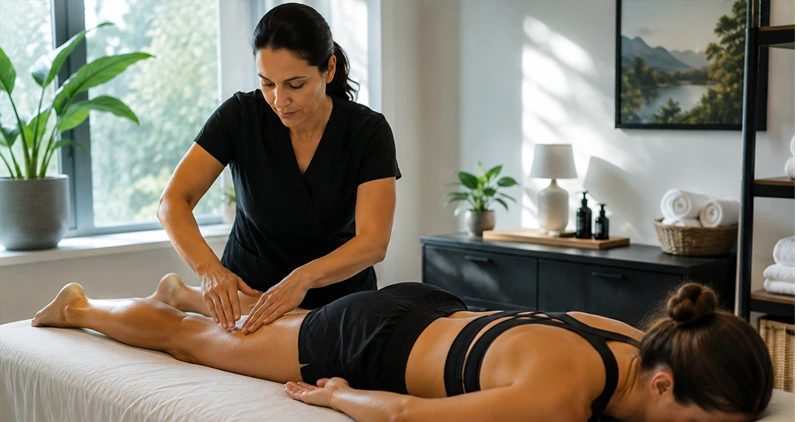
The timing of your massage matters more than most people realize. Getting a massage before your workout can loosen tight muscles and prime your body for movement, while getting one after helps flush out soreness, reduce inflammation, and speed up recovery. Neither is wrong. The better answer depends on your goals, your body, and what you’re asking your muscles to do that day.
If you’ve ever left a workout feeling like your legs weighed a hundred pounds or woken up the next morning barely able to lift your arms, you know how much recovery matters. The right massage at the right time can be the difference between bouncing back fast or dragging through your next session. Here’s what you need to know to make massage work harder for your fitness routine.
What Happens to Your Muscles During a Workout
Before deciding on massage timing, it helps to understand what’s actually going on inside your muscles when you exercise.
Muscle Fiber Breakdown and Inflammation
Every workout creates microscopic tears in your muscle fibers. That’s not a bad thing. It’s how your muscles get stronger. But while those tears are healing, you’ll feel soreness, stiffness, and fatigue. Inflammation is part of that repair process.
According to the Cleveland Clinic, this is what causes delayed onset muscle soreness (DOMS), which typically peaks 24 to 72 hours after exercise.
Fascia Tightness and Restricted Movement
Fascia is the connective tissue wrapped around your muscles. Heavy training, repetitive movement, and sitting at a desk between gym sessions can cause fascia to stiffen and restrict your range of motion. When your fascia is tight, your muscles can’t move as freely as they should. Massage helps soften and release that tension so your body can perform and recover at a higher level.
Lactic Acid and Metabolic Waste
During intense exercise, your body produces metabolic byproducts that can linger in the tissue and contribute to soreness and fatigue. Massage increases blood and lymphatic circulation, helping your body clear those byproducts more efficiently.
Read more: How massage therapy helps you better understand your body
Getting a Massage Before a Workout
A pre-workout massage can be a smart warm-up strategy, but it needs to be the right kind.
What a Pre-Workout Massage Does
A lighter massage before exercise raises tissue temperature, increases blood flow to the muscles, and improves flexibility. Think of it as a head start on your warm-up. Your joints move more freely, your muscles feel less stiff, and your nervous system gets activated in a way that can sharpen your coordination.
This works especially well for athletes who deal with chronic tightness. If your hip flexors are always locked up or your shoulders feel like concrete before you lift, a targeted pre-workout session can clear those restrictions before they limit your movement.

What Type of Massage Works Before Exercise
Not all massage styles are appropriate before training. Deep, slow pressure can temporarily reduce muscle activation, which is the opposite of what you want before a tough session. Before a workout, you want something lighter and more stimulating:
- Sports massage (lighter pressure, faster strokes to activate the muscles)
- Stretch massage to improve range of motion and joint mobility
- Trigger point work on specific problem areas that restrict movement
Book a sports massage in Pearland at Elite Massage Therapy before your next training day.
Timing a Pre-Workout Massage
Ideally, allow 30 to 60 minutes between your massage and your workout. Your body needs a little time to resettle after manual therapy. Going directly from the table to heavy lifting doesn’t give your nervous system the chance to re-engage properly.
Getting a Massage Before or After Workout: The Case for Post-Training Sessions
For most people, a post-workout massage is the more impactful choice. Here’s why.
Faster Recovery and Less Soreness
Research shows that massage after exercise can significantly reduce DOMS and accelerate muscle repair. A post-training session increases circulation to sore, fatigued tissue, helps reduce swelling, and encourages the breakdown of adhesions that form when muscle fibers knit back together after micro-tears. The result: you feel better faster, and your next workout doesn’t feel like you’re starting at a deficit.
| Timing | Primary Benefit | Best Massage Type |
|---|---|---|
| Before workout | Warm up, mobility, activation | Sports massage, stretch massage |
| 30–60 min after workout | Reduce soreness, flush metabolic waste | Swedish massage, light sports massage |
| 24–48 hours after workout | Deep recovery, tissue repair | Deep tissue massage, trigger point |
| Weekly maintenance | Prevent buildup, improve baseline | Sports massage, deep tissue |
Deep Tissue for Serious Recovery
If you’re training hard, a deep tissue massage gets into the deeper layers of muscle and connective tissue where the real stress accumulates. It’s more intense than a Swedish massage, but for athletes and active people, it targets the kind of chronic tightness and adhesions that don’t respond to lighter pressure.
Timing matters here. Wait at least 24 hours after a very intense session before booking deep tissue work. Your muscles are still in the acute repair phase immediately after heavy training, and applying deep pressure too soon can irritate inflamed tissue rather than help it heal.
Read more: deep tissue massage benefits and techniques
Swedish Massage for Active Recovery Days
On lighter training days or the day after a tough session, a Swedish massage is a great fit. The long, flowing strokes improve circulation, calm the nervous system, and promote a relaxed parasympathetic state that supports the body’s natural recovery processes. It’s gentle enough that you won’t feel wiped out after, and it does real work moving fluid through the lymphatic system.

Matching Your Massage to Your Training Type
Not all workouts are the same, and your massage approach should reflect that.
| Training Type | Recommended Massage | Best Timing |
|---|---|---|
| Strength/weightlifting | Deep tissue, trigger point | 24–48 hrs post-workout |
| Running/endurance | Sports massage, Swedish | 30–60 min post or next day |
| High-intensity intervals | Light sports massage | Same day (post), or next day |
| Yoga/mobility training | Stretch massage | Pre or post, same day OK |
| Team sports | Sports massage | Pre-game activation or post-game recovery |
Explore stretch massage in Pearland for flexibility and mobility support around your training schedule.
Read more: How often should you get a sports massage
Who Benefits Most from Regular Massage Around Workouts
Massage isn’t just for professional athletes. Anyone who moves their body regularly can benefit from building massage into their routine.
Recreational Gym-Goers
If you’re hitting the gym a few times a week, a monthly or biweekly massage session helps prevent the slow buildup of tension that eventually becomes pain. It keeps your muscles responsive and reduces your risk of overuse injuries.
Runners and Endurance Athletes
Repetitive motion creates repetitive stress. Runners are especially prone to tight hip flexors, IT band issues, and calf tightness. Regular massage breaks that cycle and keep the legs feeling fresh between long runs.
Anyone Returning from Injury
If you’re coming back to exercise after an injury, massage helps with scar tissue management and restoring the range of motion. Work closely with your therapist to make sure the session supports your recovery rather than pushing too hard too soon.
Read more: guide to sports massage for athletes
Why Choose Elite Massage Therapy in Pearland
Elite Massage Therapy’s team understands that active bodies have specific needs. Whether you’re training for a 5K, hitting the gym five days a week, or just trying to stay mobile and pain-free, the therapists here customize every session to where your body actually is, not a generic template.
You’ll find licensed therapists skilled in sports massage, deep tissue, stretch massage, and trigger point therapy, all the techniques that matter most for athletic recovery and performance. Sessions are tailored, unhurried, and focused on getting real results. No one-size-fits-all approach here.
Pearland locals have consistently trusted Elite Massage Therapy for recovery support that keeps them moving. Whether you need pre-workout activation or post-training relief, the team is ready to build a massage plan that fits your schedule and your fitness goals.
Book your session now and let’s build a recovery routine that keeps you performing at your best
Bottom Line: Massage Before or After Workout
Both have their place. Pre-workout massage primes your muscles for movement and helps prevent injury. Post-workout massage accelerates recovery, reduces soreness, and lets you train harder and more consistently. For most active people, the combination of a light pre-workout session when needed and regular post-training recovery massage delivers the best long-term results.
Don’t wait until something hurts to make massage part of your routine. Consistent sessions are what keep your body resilient, flexible, and ready to go.
Ready to feel the difference? Schedule a session at Elite Massage Therapy in Pearland and experience recovery done right.
Frequently Asked Questions: Massage Before or After Workout
Is it better to get a massage before or after a workout?
For most people, post-workout massage is more beneficial. It targets muscle soreness, speeds repair, and flushes out metabolic byproducts. That said, a lighter pre-workout massage can improve mobility and activation before training, making both options valuable depending on your goal. If you can only choose one, plan your deep recovery work after your hardest sessions.
Can a massage before a workout improve performance?
Yes, a light pre-workout massage can improve range of motion, reduce muscle stiffness, and help activate the nervous system before training. The key is to keep the pressure light and stimulating, rather than slow and heavy.
Deep pressure before a workout can temporarily reduce muscle activation, so stick to techniques like sports massage or stretch massage in the 30 to 60 minutes before you train.
How soon after a workout should I get a massage?
You can receive a lighter massage, like Swedish or gentle sports massage, within 30 to 60 minutes after a workout. For deeper work like deep tissue or trigger point therapy, wait 24 to 48 hours after intense training to avoid applying heavy pressure to acutely inflamed tissue.
Listening to your body matters here. If you’re very sore, give yourself a day before the deeper sessions.
What type of massage is best for athletes?
Sports massage is specifically designed for active individuals and targets the muscle groups most stressed by your training. It combines techniques from Swedish, deep tissue, and stretch massage to warm up and help athletes recover. For chronic knots and tightness, trigger-point massage is highly effective, and deep-tissue massage is ideal for serious post-training recovery.
The right choice depends on your training phase and what your body needs that day. Book a session at Elite Massage Therapy in Pearland to get a personalized recommendation.
How often should active people get a massage?
Most active people benefit from a massage every 2 to 4 weeks, with more frequent sessions during heavy training blocks. If you’re training intensely or preparing for an event, weekly sessions can help you maintain performance without accumulating excessive muscular stress. For general maintenance and injury prevention, a biweekly or monthly massage is enough to keep your body responding well to exercise.