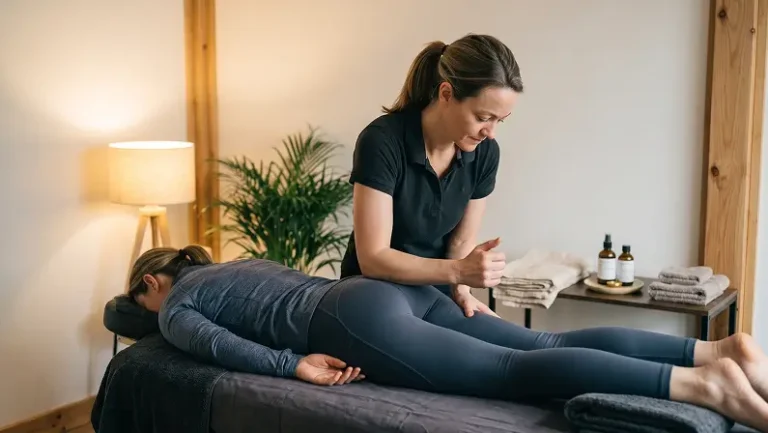


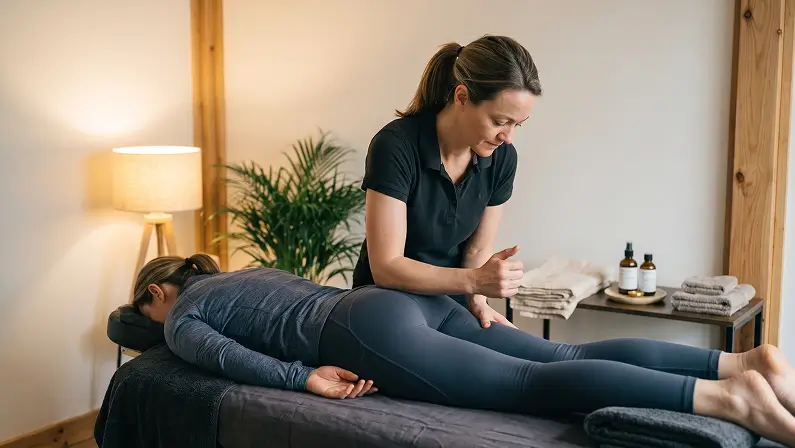
Massage for hip pain works best when the ache comes from tight or overworked muscles around the hip, like the glutes, hip flexors, piriformis, and the muscles along the outside of your thigh. A focused session can ease that tension, open up your range of motion, and take the edge off the pain, especially when you pair it with regular stretching and strengthening.
Your hips do a lot of quiet work. They carry you through every step, every staircase, and every long hour in a desk chair or behind the wheel. When the muscles around them tighten up, the pain can show up in your buttock, the side of your hip, the front of your groin, or even your lower back.
Below, you’ll learn what’s usually behind muscular hip pain, which massage techniques target it best, how to work on it at home, and when hip pain needs a doctor instead of a massage table.
Can Massage Really Help Hip Pain?
Yes, for the right kind of pain. A large systematic review of massage therapy in people with pain found massage reduced pain compared with no treatment, and smaller studies have shown moderate-pressure massage easing hip pain specifically.
Here’s how a hip massage helps:
- Loosens muscles that pull on the joint. Tight glutes and hip flexors tug on the pelvis and change how the hip moves.
- Releases trigger points. Knots in the hip muscles often send pain somewhere else, like down the side of your leg or into your lower back.
- Improves blood flow to tired, overworked tissue.
- Restores range of motion, so walking, squatting, and climbing stairs feel easier.
- Calms the stress and tension cycle that keeps sore muscles guarded and tight.
What massage won’t do is build strength, repair a torn labrum, or reverse arthritis. Think of it as the part of your plan that makes movement easier, so your stretches and exercises actually work.
Where Hip Pain Usually Comes From
Where you feel the pain gives you a strong clue about what’s causing it. Pain on the outside of the hip or deep in the buttock usually points to muscles. Pain on the inside of the hip or in the groin more often involves the joint itself.
| Where you feel it | Muscles often involved | Massage that usually helps |
| Outer hip, side of the thigh | Gluteus medius and minimus, TFL, IT band | Trigger point, deep tissue |
| Deep in the buttock, sometimes down the leg | Piriformis and deep hip rotators | Trigger point, deep tissue |
| Front of the hip, worse after sitting | Hip flexors (psoas, iliacus, rectus femoris) | Stretch massage, deep tissue |
| Hip and lower back together | Glutes, quadratus lumborum, lower back muscles | Deep tissue, Swedish |
| Inner hip or groin, stiff in the morning | Often the hip joint itself | See a doctor first |
Two patterns come up again and again. Knots in the gluteus medius and minimus are commonly mistaken for joint pain because they refer an ache right into the side of the hip (more on that in our guide to how trigger point massage relieves pain). And a tight piriformis can irritate the sciatic nerve that runs beneath it, causing sharp or shooting pain into the buttock and leg.
Best Types of Massage for Hip Pain
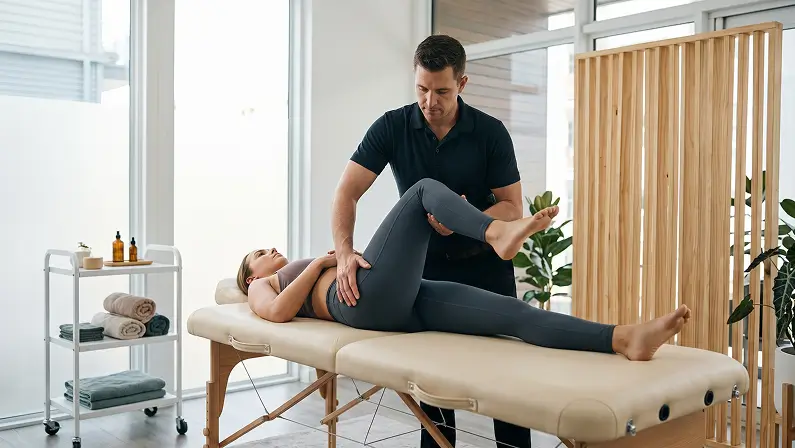
The right technique depends on what’s tight, how sensitive the area is, and how long the pain has been around. Most good hip sessions blend two or three approaches.
Deep Tissue Massage
Deep tissue massage uses slow, firm pressure to reach the deeper layers of muscle and connective tissue. It’s the go-to for chronic tightness in the glutes, outer hip, and lower back. It can feel intense, but it should never feel sharp or make you hold your breath.
Trigger Point Massage
Trigger point massage applies steady, direct pressure to specific knots until they release. It’s especially effective for gluteus medius and piriformis knots that send pain into the hip, thigh, or lower back.
Stretch Massage
Tight hip flexors from long hours of sitting respond well to movement. Stretch massage combines hands-on work with assisted stretches, so your therapist can lengthen the front of the hip and improve rotation in ways that are hard to do on your own.
Sports Massage
If you run, lift, or play a sport, sports massage targets the muscle groups your activity loads the most. It’s useful for recovery after a big race or training block and for keeping repetitive strain from turning into lasting hip pain.
Swedish Massage
Swedish massage uses lighter, flowing strokes to boost circulation and relax the whole body. It’s a good starting point if your hips are very tender or you’re new to massage, and it pairs well with targeted work on a single problem area.
Hip pain slowing you down? Book a session at Elite Massage Therapy and tell your therapist exactly where it hurts.
How to Massage Your Hip at Home
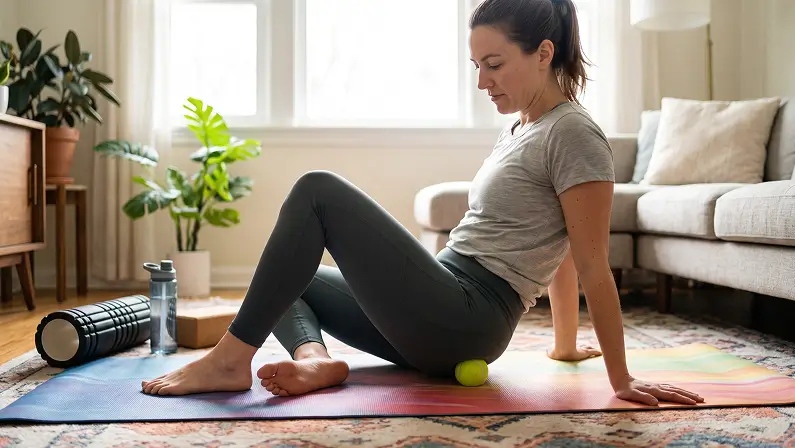
Between appointments, a few minutes of self-massage helps keep tension from building back up. All you need is a tennis or lacrosse ball and a foam roller.
- Outer hip and glutes. Lie on your side or sit on the floor with a ball under the meaty part of your outer hip, just above and behind the bony point. Lean in slowly and hold on tender spots for 30 to 60 seconds.
- Piriformis. Sit on the ball in the center of one buttock, then cross that ankle over the opposite knee in a figure-four position. Small movements are plenty.
- Front of the thigh. Lie face down on a foam roller and roll slowly from just below the hip to above the knee.
- Breathe and stay in control. Pressure should feel like a “good hurt” you can relax into, around a 5 or 6 out of 10.
Skip rolling directly on the bony outer hip, especially if it’s tender to the touch, since that area can be inflamed bursa rather than tight muscle. For a sense of how often to work a knot, see how often you should massage a trigger point.
When to Skip the Massage and See a Doctor
Massage is great for muscle tension. It isn’t a substitute for a diagnosis. Hospital for Special Surgery recommends seeing a doctor when home care hasn’t helped after about a week or when certain red flags show up. Check in with a doctor before booking a massage if you have:
- Hip pain after a fall or injury, or you can’t put weight on your leg
- Swelling, warmth, or redness around the hip
- Fever or chills along with hip pain
- Pain that wakes you up at night or keeps getting worse
- Groin pain with clicking, locking, or catching in the joint
- Numbness, tingling, or weakness down the leg
- A recent hip surgery or replacement
- Calf swelling, warmth, or tenderness, which can signal a blood clot
If you’re pregnant, choose a therapist trained in prenatal massage, since positioning and pressure need to be adjusted.
How Often Should You Get a Hip Massage?
There’s no single right schedule. These are typical starting points your therapist can adjust after your first visit.
| Your situation | Typical starting frequency |
| New flare-up of muscle tightness | Once a week for 3 to 4 weeks, then reassess |
| Chronic tightness from sitting all day | Every 2 to 4 weeks |
| Runners, lifters, and active adults | Every 2 to 4 weeks, plus after big events |
| Maintenance once the pain settles | About once a month |
If your hip pain comes from long workdays at a desk, you’ll find more on that pattern in our guide to deep tissue massage for desk workers.
Hip Pain Massage in Pearland at Elite Massage Therapy
At Elite Massage Therapy, every session starts with a quick conversation about where your pain sits, what makes it worse, and how much pressure you like. Your therapist then builds the session around you, often combining deep tissue, trigger point, and stretch techniques to work the hip, glutes, and lower back together.
A few things to know before you book:
- Choose 90 minutes if you can. Hips rarely tighten up alone. The extra time lets your therapist cover your lower back and legs without rushing.
- Speak up during the session. You can ask for more or less pressure at any point.
- Plan an easy rest of the day. Drink water, take a short walk, and save heavy leg workouts for tomorrow.
You’ll find us at 1925 Pearland Parkway, Suite 120, open Monday through Saturday from 10 am to 9 pm and Sunday from 10 am to 6 pm.
Getting Your Hips Moving Again
Most hip pain that comes from tight muscles responds well to a mix of hands-on work, regular stretching, and a little strengthening. Massage for hip pain gives you the first piece: looser tissue, better range of motion, and a calmer, less guarded body that’s ready to move. If your pain points to the joint or comes with red flags, see a doctor first, then add massage once you’re cleared.
Ready to feel the difference? Book your hip-focused massage in Pearland or call +1 (346) 907-5104.
Massage for Hip Pain FAQs
Is it good to massage hip pain?
Yes, when the pain comes from tight or knotted muscles around the hip. Massage loosens the glutes, hip flexors, and deep rotators that often drive hip pain. If the pain followed an injury or comes with swelling, fever, or numbness, see a doctor before getting a massage.
Where is the pressure point to relieve hip pain?
The most common spot is the gluteus medius, on the outer hip just above and behind the bony point at the side. Another common one sits in the center of the buttock over the piriformis. Hold steady pressure on a tender spot for 30 to 60 seconds and let it soften.
What type of massage is best for hip pain?
Deep tissue and trigger point massage are usually the most effective for muscular hip pain. Stretch massage is a strong choice for tight hip flexors from sitting. For the best fit, book with Elite Massage Therapy in Pearland and your therapist will combine techniques for your body. Book here.
How often should I get a hip massage?
Once a week for a few weeks during a flare-up, then every 2 to 4 weeks for maintenance. Active people and anyone who sits for long hours often do well with a session every couple of weeks. Your therapist can adjust the schedule based on how your hip responds.
What should you not do with hip pain?
Don’t push through sharp pain, ignore red flags, or stop moving altogether. Avoid deep pressure on a freshly injured or swollen hip and skip rolling directly on the bony outer hip. Gentle movement, like walking and easy stretching, usually helps more than complete rest.