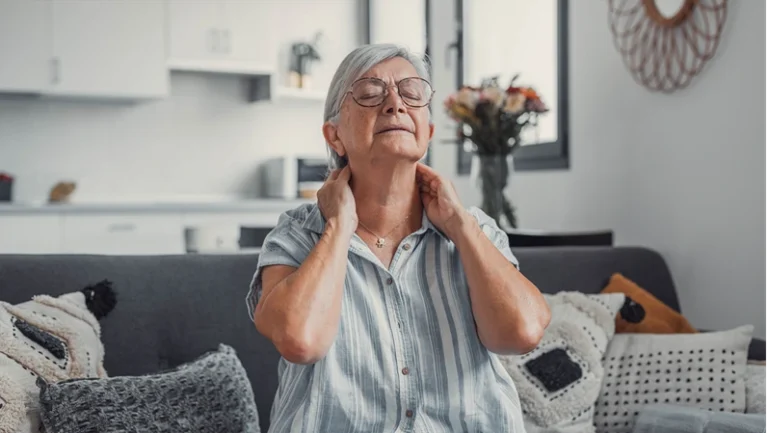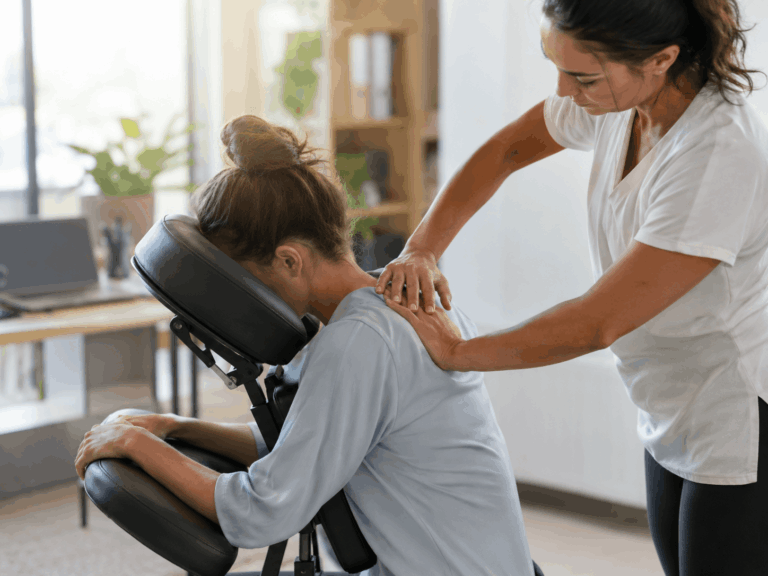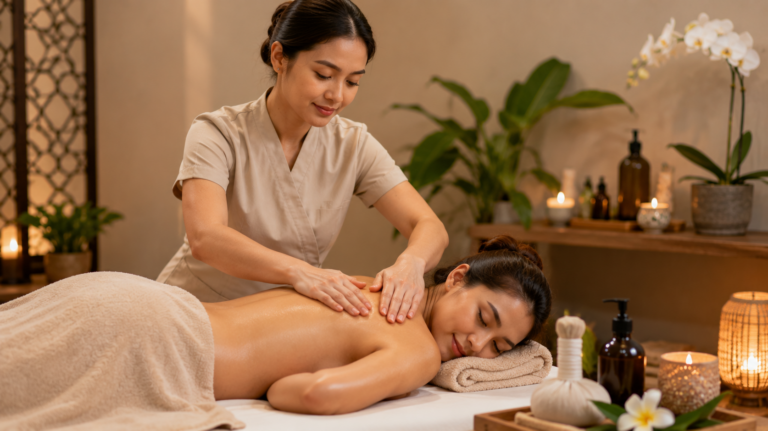


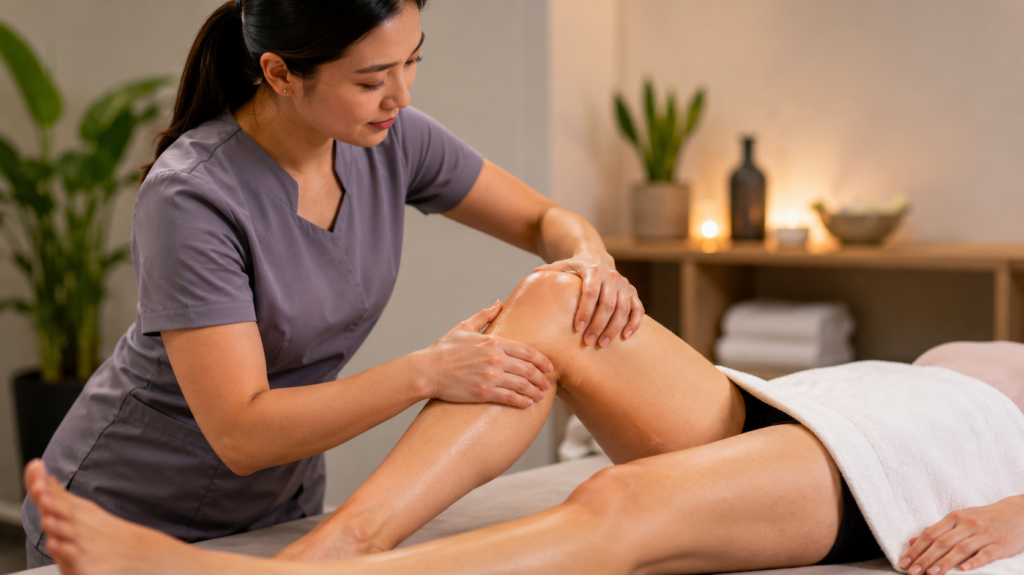
Massage therapy for knee pain works by loosening the muscles, tendons, and connective tissue around the joint, rather than directly touching the knee. That shift in focus is what makes it effective. Most knee pain isn’t purely a knee problem. It’s often the quads, hamstrings, calves, and IT band pulling unevenly on the joint until something starts to ache.
If you’ve been dealing with knee pain from overuse, an old injury, arthritis, or just sitting too much, you’ve probably tried stretching, rest, maybe an ice pack, and rotation that didn’t do much in the long term. Massage takes a different approach. It gets into the tissue that’s actually driving the tension, so the knee has less to fight against with every step.
Here’s what to know before you book a session, including which techniques work best, where a therapist actually focuses, and how often you should come in.
How Massage Works for Knee Pain
Your knee is a hinge joint, but it doesn’t move in isolation. Every bend, step, and squat depends on the muscles above and below it working together. When one of those muscle groups gets tight, whether from training, an old injury, or just hours at a desk, it pulls on the joint at an angle it wasn’t built for.
Over time, that uneven pull changes how you walk, stand, and load weight through the leg. Small compensations turn into bigger ones, and the knee ends up absorbing stress it wasn’t designed to handle. This is why stretching alone often falls short. Stretching temporarily lengthens tissue, but it doesn’t release the deeper knots and adhesions that keep pulling the muscle back into the same tight pattern.
A skilled therapist works through that surrounding tissue to release the tightness, improve blood flow, and reduce the compensations your body has been making. This doesn’t replace a diagnosis from a doctor or physical therapist, but it can meaningfully reduce day-to-day discomfort while you address the root cause, and many clients use it alongside physical therapy rather than instead of it.

Cleveland Clinic notes that massage can help reduce muscle tension and improve circulation in areas surrounding an injury, which supports the body’s own recovery process.
Best Massage Types for Knee Pain
Not every massage style approaches knee pain the same way. Some are built for deep, targeted relief. Others work better for flexibility or general tightness. Here’s how the main options compare.
Deep Tissue Massage
Deep tissue massage is usually the first recommendation for chronic knee pain. It uses slow, firm pressure to reach the deeper layers of muscle in the quads, hamstrings, and calves. If your knee pain has been building for months, this is often where a therapist starts, because it addresses the tight, overworked tissue that’s been quietly loading extra stress onto the joint. Sessions can feel intense in the moment, but most clients notice looser movement within a day or two.
Book a deep tissue massage in Pearland at Elite Massage Therapy if chronic tightness is behind your knee pain.
Trigger Point Massage
Sometimes knee pain traces back to a single knot, or trigger point, in a muscle like the vastus medialis or the IT band. Trigger point massage isolates that spot and applies focused, sustained pressure until the tension releases. It can feel uncomfortable in the moment, but many clients notice relief within the same session, and the effect often lasts longer than a general relaxation massage because it targets the actual source of the referred pain.
Explore trigger point massage at Elite Massage Therapy for pain tied to one specific spot.
Sports and Stretch Massage
If your knee pain comes from running, sports, or a training routine, sports massage and stretch massage are worth considering. These styles combine muscle work with assisted stretching to improve range of motion and help the knee move through its full arc without strain. They’re also a smart choice for active clients who want to stay ahead of tightness rather than wait for pain to show up.
Browse sports massage options at Elite Massage Therapy if training is contributing to your knee pain.
| Massage Type | Best For | What to Expect |
| Deep Tissue | Chronic tightness, long-term knee pain | Firm, sustained pressure on quads, hamstrings, calves |
| Trigger Point | A specific tender spot or knot | Focused pressure is held on one area until it releases |
| Sports / Stretch | Active clients, athletes, post-training soreness | Muscle work combined with assisted stretching |

Where a Therapist Focuses During Your Session
A good knee-focused massage rarely spends much time on the knee joint itself. Instead, expect to work on the muscles that control knee movement.
- Quadriceps, especially the vastus medialis, just above the inner knee
- Hamstrings, which affect how the knee bends and straightens
- Calves and the popliteus muscle behind the knee
- The IT band running along the outer thigh from the hip to the knee
- Hip flexors, since tight hips change how the knee tracks
Your therapist will ask where the pain shows up and when, then map out which of these areas is contributing the most. Rather than using the same routine for every client, they’ll spend more time on the muscle group that’s pulling hardest on your particular knee.
Read more: how deep tissue massage improves posture, which shares the same muscle-chain logic used for knee pain.
How Often Should You Get a Knee Massage
There’s no single script for massage therapy for knee pain, since the right frequency depends on how long you’ve had the pain and what’s driving it. A single session can bring temporary relief, but consistent bodywork is what actually changes the tissue over time.
| Situation | Suggested Frequency |
| New or mild knee tightness | Every 3 to 4 weeks |
| Chronic pain or old injury | Every 1 to 2 weeks until improved, then monthly |
| Active training or sports season | Every 2 weeks, or after intense sessions |
| Post-surgery (with clearance) | As recommended by your physical therapist or doctor |
Most clients find that spacing sessions too far apart allows tightness to rebuild before the last one has a chance to fully settle. A therapist can help you land on a schedule that actually fits your body and your goals, and that schedule can always be adjusted as your pain changes.
Things to Know Before Your Session
A little preparation goes a long way toward getting the most out of your visit.
- Mention any diagnosis, surgery, or imaging results you have, even if it feels like too much detail. It helps your therapist avoid areas that need extra care.
- Wear or bring shorts so the therapist can access the thigh and calf muscles directly without working through fabric.
- Avoid deep-tissue work within 48 hours of an acute flare-up or visible swelling, as the tissue needs time to calm down first.
- Drink water afterward, since deeper muscle work can leave you a bit sore or tender the next day.
- Ask about combining trigger-point or stretching techniques if your pain has a specific hot spot rather than general tightness.
Read more: relieving pain with trigger point massage for a closer look at how targeted pressure works.
Why Choose Elite Massage Therapy in Pearland
Elite Massage Therapy in Pearland, TX, takes a personalized approach to every session, which matters a lot when you’re dealing with joint pain. The team doesn’t run a one-size-fits-all routine. They ask about your specific pain pattern, your activity level, and what’s already been tried, then build the session around the muscles actually driving your discomfort.
Whether you need deep-tissue work for long-standing tightness, trigger-point therapy for a stubborn knot, or a stretch-focused session to support an active lifestyle, the therapists at Elite Massage Therapy adjust their technique and pressure to what your knee actually needs that day, not to a generic template.
Read more: how often you should get a sports massage if you’re active and trying to build a maintenance routine.
Finding Relief with Massage Therapy for Knee Pain
Knee pain rarely has one single cause, which is exactly why massage can help. By working the muscles and connective tissue surrounding the joint, a skilled therapist reduces the pull and compensation patterns that perpetuate the pain. Pair that with the right frequency for your situation, and most clients notice steady improvement over a few sessions.
Book a session at Elite Massage Therapy in Pearland and let a licensed therapist develop a plan to address your knee pain.
Frequently Asked Questions: Massage Therapy for Knee Pain
Is massage therapy good for knee pain?
Yes, massage therapy is effective for most types of knee pain caused by muscle tightness, overuse, or minor injury. It works by releasing tension in the quads, hamstrings, calves, and IT band, which reduces the pull on the joint itself. For pain linked to a serious injury or post-surgical recovery, it works best alongside guidance from your doctor or physical therapist.
Where to massage if your knee hurts?
Focus on the muscles above and below the knee rather than the joint itself. That means the quadriceps (especially near the inner knee), hamstrings, calves, and the IT band along the outer thigh. A therapist will also check the hip flexors, since tight hips often change how the knee tracks and loads.
Which massage is best for knee pain?
Deep tissue massage is usually the best starting point for chronic knee pain, while trigger point massage works well for a specific tender spot. If your knee pain is tied to training or sports, a stretch or sports massage can also help by improving range of motion around the joint. Elite Massage Therapy in Pearland offers all three and can recommend the right fit after hearing about your specific pain.
How often should you get a knee massage?
Most people benefit from a session every 1 to 2 weeks while pain is active, then can shift to monthly for maintenance. Athletes or active clients often do well every two weeks or after particularly intense training. Your therapist can adjust this based on how your body responds after the first couple of visits.