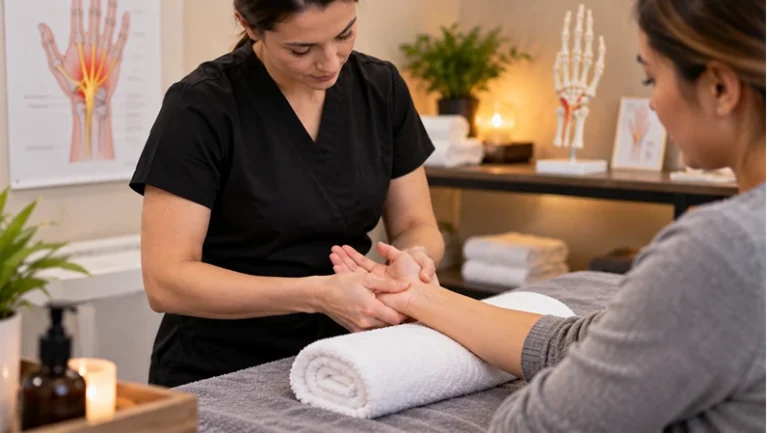


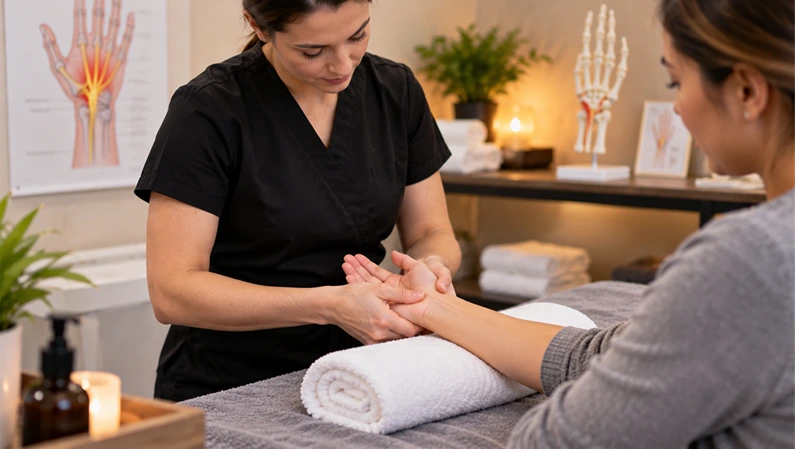
Massage for carpal tunnel can ease numbness, tingling, and wrist pain by loosening the tight forearm muscles and tissues that crowd the median nerve. It works best in the early and moderate stages, before constant numbness or hand weakness sets in.
If you spend your day typing, gripping a mouse, using tools, or scrolling on your phone, your hands rarely get a break. Over time, that repetitive strain can leave your fingers tingling at night, your grip weaker than it used to be, and your wrist aching by the end of the workday. Many people shake their hands out and push through it for months.
You don’t have to. Below, you’ll learn what carpal tunnel syndrome actually is, why hands-on work helps, the techniques therapists use, what you can do between sessions, and when it’s time to talk to a doctor about surgery.
What Is Carpal Tunnel Syndrome?

The carpal tunnel is a narrow passageway in your wrist, formed by small wrist bones and a tough band of tissue called the transverse carpal ligament. Running through that tunnel are nine tendons and the median nerve, which gives feeling to your thumb, index finger, middle finger, and part of your ring finger.
When the space inside the tunnel gets crowded, the median nerve gets squeezed. The Mayo Clinic explains that this pressure on the median nerve is what causes carpal tunnel syndrome’s hallmark symptoms.
Common Symptoms
- Tingling or numbness in your thumb and first three fingers
- Symptoms that wake you up at night or show up first thing in the morning
- Pain or aching that travels from your wrist into your forearm
- A weaker grip or a tendency to drop things
- Relief when you shake out or flick your hand
Who Tends to Get It
Carpal tunnel often shows up in people whose work or hobbies involve repetitive hand and wrist motion: office workers, hairstylists, mechanics, musicians, and people who use vibrating tools. Pregnancy, diabetes, thyroid conditions, and arthritis can also raise your risk, according to MedlinePlus. Women are diagnosed more often than men, partly because the carpal tunnel tends to be smaller.
Why Massage Helps Carpal Tunnel
Here’s something many people don’t realize: a lot of the tension behind wrist symptoms lives in the forearm, not the wrist itself. The muscles that bend your wrist and curl your fingers start near your elbow, and their tendons run straight through the carpal tunnel. When those muscles stay tight and overworked, the tendons thicken and swell, adding pressure inside an already crowded space.
Releasing Forearm Tension
Your therapist works the flexor muscles on the palm side of your forearm, easing the tightness that pulls on the tendons passing through the tunnel. Many clients are surprised by how tender these muscles feel, even when their symptoms seem to be only in the hand.
Easing Pressure Around the Wrist and Palm
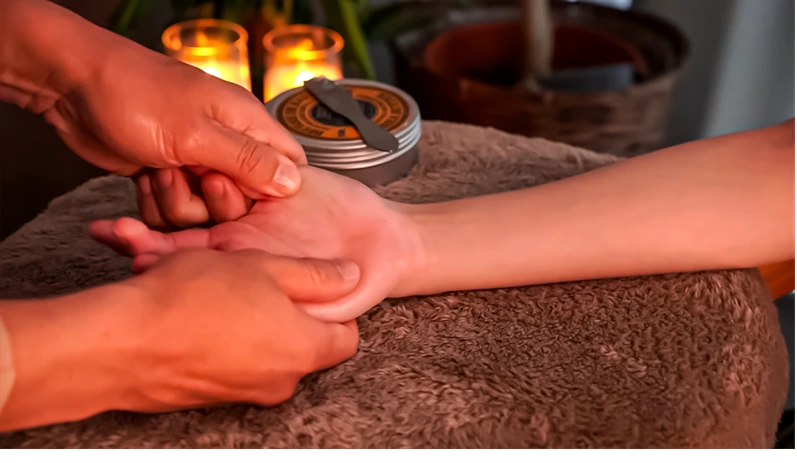
Gentle work across the wrist and the base of the thumb helps soften the surrounding tissue and improve local circulation. The goal isn’t to press hard on the nerve. It’s to reduce the stiffness around it so the tendons and nerve can glide more freely.
Looking Beyond the Wrist
Nerve tension doesn’t always start at the wrist. Tightness in the neck, shoulders, chest, and upper arm can add strain along the path of the nerves that feed your hand. That’s why a good session often includes your upper body, especially if you sit at a desk for hours.
What Massage Can and Can’t Do
Massage is a hands-on way to reduce the muscle tension, stiffness, and poor tissue glide that make nerve compression worse. It won’t widen the carpal tunnel or reverse nerve damage that has already happened. Think of it as one part of a smart plan that also includes rest breaks, better wrist positioning, and a doctor’s input when symptoms don’t settle. When you combine those pieces early, you give the median nerve the best chance to calm down before the problem becomes constant.
Read more: deep tissue massage for desk workers and posture pain
Carpal Tunnel Massage Techniques We Use
Carpal tunnel massage techniques are more precise than a general relaxation massage. Your therapist adjusts pressure constantly, because the goal is to relieve compression, not add to it.
Forearm Stripping and Myofascial Release
Forearm stripping uses slow, gliding pressure along the length of the forearm muscles, usually from the wrist toward the elbow. Myofascial release applies sustained, gentle stretch to the connective tissue wrapped around those muscles. Together, they help lengthen tight tissue and restore smoother movement through the wrist and fingers.
Trigger Point Therapy
Knots in the forearm, upper arm, and even the shoulder can send pain and tingling into the hand. Trigger point massage uses focused, steady pressure to release those knots so they stop referring symptoms downstream.
Deep Tissue Work for the Upper Body
If desk posture is part of your story, your therapist may add deep tissue massage to the neck, shoulders, and chest. Rounded shoulders and a forward head position tighten the muscles that nerves pass through on their way to the arm, so easing that tension can support wrist relief.
Gentle Wrist Mobilization
Your therapist may finish with gentle wrist and finger stretches and small, controlled joint movements. These help restore range of motion and encourage the tendons to slide freely through the tunnel.
Read more: how trigger point massage relieves pain
Self-Care Between Sessions
What you do between appointments matters as much as the session itself. Small daily habits keep your forearms from tightening back up.
- Take micro-breaks. Every 30 to 45 minutes, stop typing or gripping, open your hands wide, and gently shake them out.
- Try forearm self-massage. Rest your forearm on a table, palm up, and use your opposite thumb to make slow, gentle strokes from wrist to elbow for a minute or two.
- Stretch your wrist flexors. With your arm straight and palm facing out, gently pull your fingers back with your other hand and hold for 20 to 30 seconds. Stop if it causes tingling.
- Keep your wrists neutral. Adjust your keyboard and mouse so your wrists stay straight rather than bent up or down.
- Consider a night splint. A wrist splint that keeps your hand straight while you sleep can reduce nighttime symptoms. Ask your doctor which type fits your needs.
- Use gentle movement, not force. Your therapist or physical therapist can show you nerve gliding exercises that help the median nerve move smoothly.
If your job keeps you at a computer all day, pairing these habits with regular bodywork makes a real difference.
Read more: the best massage for office workers
When Surgery Is the Conversation Instead
Massage is most effective when carpal tunnel symptoms come and go. Once nerve compression becomes constant or starts affecting muscle strength, it’s time for a medical evaluation. A doctor may recommend splinting, a steroid injection, or carpal tunnel release surgery, which cuts the ligament to give the nerve more room.
Use this guide to see where massage for carpal tunnel fits at each stage:
| Symptom Stage | What You Might Notice | Recommended Approach |
| Early or mild | Occasional tingling, nighttime numbness that shakes out, mild wrist ache | Massage, self-care, ergonomic changes, night splint |
| Moderate | Frequent numbness, daytime symptoms, occasional dropped objects | Massage alongside a doctor’s evaluation, splinting, possible physical therapy |
| Severe | Constant numbness, clear hand weakness, shrinking muscle at the base of the thumb | See a doctor promptly; surgery is often discussed at this stage |
| After surgery | Stiffness, soreness, scar tenderness | Wait for your surgeon’s clearance, then gentle forearm and scar tissue work |
Talk to a doctor soon if your numbness never goes away, your grip is getting weaker, you notice muscle loss near your thumb, or your symptoms haven’t improved after several weeks of conservative care. Waiting too long with severe compression can lead to lasting nerve damage.
Carpal Tunnel Massage in Pearland
At Elite Massage Therapy in Pearland, TX, we look at the whole chain from your neck to your fingertips, not just your wrist. Every session starts with a conversation about your symptoms, your work, and the daily movements that might be feeding the problem.
Here’s what sets our approach apart:
- Licensed therapists skilled in trigger point, deep tissue, and myofascial techniques
- Personalized care with pressure adjusted carefully around sensitive nerve areas
- Practical guidance on stretches and workstation habits you can use between visits
- Flexible options, including massage packages that make a regular recovery schedule easier to stick with
- A convenient location for clients in Pearland, Shadow Creek Ranch, Friendswood, Manvel, and South Houston
Whether you type all day, work with your hands, or just notice your fingers tingling more often, we’ll build a session around what your body needs.
Getting Your Grip Back: Massage for Carpal Tunnel Relief
Tingling fingers and an aching wrist are signals worth listening to. By releasing tight forearm muscles, easing tension up the arm, and building better daily habits, you can take real pressure off the median nerve and keep symptoms from progressing. The earlier you start, the better your results tend to be.
Ready to give your hands a break? Book your session at Elite Massage Therapy or call +1 (346) 907-5104.
Massage for Carpal Tunnel: Your Questions Answered
Does massage help carpal tunnel?
Yes, massage can reduce tingling, numbness, and wrist pain, especially in mild to moderate cases. It works by releasing tight forearm muscles and improving movement around the median nerve. For severe or persistent symptoms, combine it with medical care.
How long does it take to feel results?
Many people notice less tingling or stiffness within a few sessions. Longer-standing symptoms usually need a consistent series of weekly visits, plus daily self-care. Your therapist will track your progress and adjust the plan as you go.
Is carpal tunnel massage painful?
It shouldn’t be painful, though tight forearm muscles can feel tender during the work. Your therapist keeps pressure careful around the wrist and nerve. Let them know right away if you feel sharp pain or increased tingling.
Can I massage my own wrist for carpal tunnel?
Yes, gentle forearm self-massage and wrist stretches can help between professional sessions. Keep pressure light, work from wrist toward elbow, and stop if symptoms increase. Self-care supports your results, but it can’t replace focused therapeutic work.
Can massage help me avoid carpal tunnel surgery?
In early and moderate cases, massage combined with splinting and ergonomic changes may help you manage symptoms without surgery. If you have constant numbness, weakness, or muscle loss at the base of your thumb, see a doctor. At that stage, surgery may be the best way to protect the nerve.