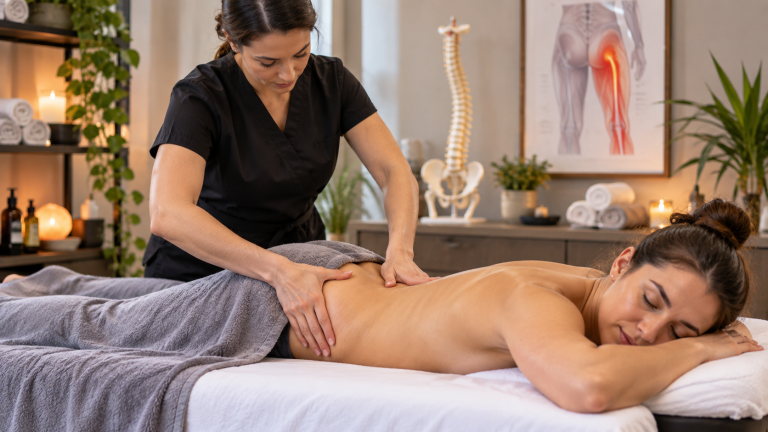


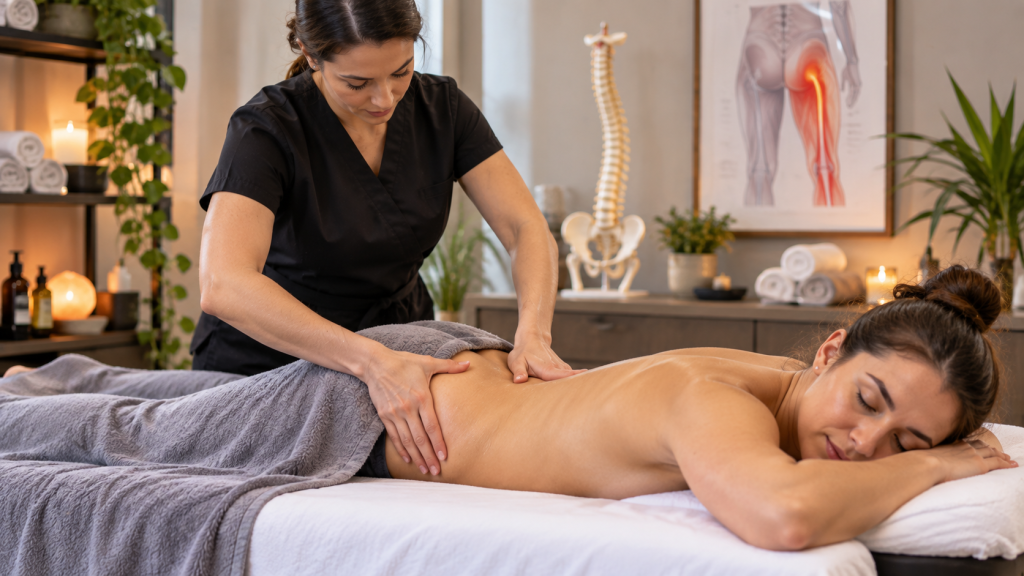
Yes, massage for sciatica can ease sciatic nerve pain by relaxing the tight muscles that press on or irritate the nerve, especially the piriformis and the deep rotators of the hip. It won’t repair a herniated disc, but it can calm the muscle tension and protective guarding that make nerve pain feel so much worse.
If you’ve had sciatica, you know it isn’t ordinary back pain. It’s a burning, electric, or tingling pain that runs from your lower back or buttock down the back of your leg, sometimes all the way to your foot. Sitting through a workday gets hard. Sleeping on your side hurts. Even getting out of the car can send a jolt down your leg.
The good news is that a lot of that pain is driven by muscles, and muscles respond well to skilled hands. Below, you’ll learn what actually causes sciatic nerve pain, which massage techniques target it, what a session looks like, and the warning signs that mean you should see a doctor first.
What Causes Sciatic Nerve Pain?
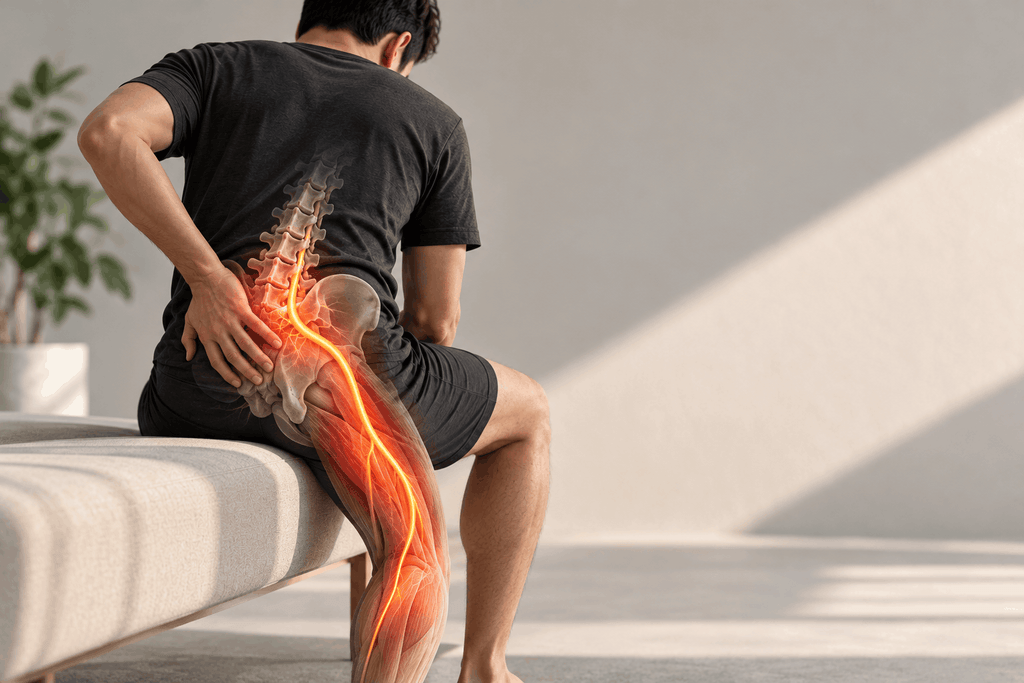
The sciatic nerve is the longest nerve in your body. It starts as several nerve roots in your lower spine, travels through your buttock beneath the piriformis muscle, and runs down the back of each leg. When something squeezes or irritates it anywhere along that path, you feel it as sciatica.
According to the Mayo Clinic, sciatica most often happens when a herniated disk or an overgrowth of bone puts pressure on part of the nerve. That’s a useful starting point, but it isn’t the whole picture.
Spinal Causes
A bulging or herniated disc, spinal stenosis (narrowing of the spinal canal), or bone spurs can press on the nerve roots before they ever leave your spine. Pain from these causes often gets worse when you bend forward, cough, or sit for long periods. Massage can ease the muscle spasm that surrounds the problem, but it can’t move a disc back into place.
Piriformis Syndrome
The piriformis is a small, deep muscle in your buttock that helps rotate your hip outward. The sciatic nerve runs right beneath it, and in some people, through it. When the piriformis gets tight, overworked, or goes into spasm, it can squeeze the nerve and create pain that looks and feels just like disc-related sciatica. This is where massage often makes the biggest difference.
Muscle Tension and Guarding
Once nerve pain starts, your body tries to protect the area. The glutes, low back muscles, and hamstrings tighten up to limit movement. That guarding adds pressure, reduces blood flow, and keeps the pain cycle going long after the original irritation has settled down.
Does Massage Help Sciatica?
For many people, yes. Massage doesn’t cure every case of sciatica, but it works on several of the factors that keep nerve pain active:
- Releasing tight muscles around the hip and lower back takes pressure off the nerve, especially when the piriformis is involved.
- Improving circulation brings blood flow to tissues that have been clenched and guarded for weeks.
- Reducing muscle guarding helps you move more naturally, which is one of the best things you can do for a sciatic flare-up.
- Calming the nervous system lowers how intensely your body perceives pain.
The honest limit is this: if your sciatica comes from a disc herniation or stenosis, massage treats the muscular side of the problem, not the structural cause. For those cases, it works best alongside physical therapy, movement, and your doctor’s care plan.
It also helps to know the difference between general back pain and nerve pain. If your discomfort stays in your back and doesn’t travel down your leg, you may be dealing with muscle strain rather than sciatica.
Read more: how deep tissue massage relieves back pain
Best Massage Types for Sciatica Relief
Not every massage is right for nerve pain. A light, relaxing session may feel nice but won’t reach the deep hip muscles that matter most. On the other hand, aggressive pressure directly over an irritated nerve can make symptoms flare. The best approach combines targeted depth with careful attention to how your body responds.
Deep Tissue Massage
Deep tissue massage uses slow, firm strokes to reach the deeper layers of muscle and fascia. For sciatica, your therapist focuses on the gluteal muscles, the piriformis, the quadratus lumborum (a deep low back muscle), and the hamstrings.
Piriformis massage is often the centerpiece. With you lying on your side or face down, your therapist works into the muscle with sustained pressure, gradually softening it so it stops clamping down on the nerve. Many clients feel their leg symptoms ease during or shortly after this work.
Trigger Point Therapy
Trigger points are tight, tender knots in a muscle that send pain to other areas. Knots in the gluteus medius and gluteus minimus are known for referring pain down the side and back of the leg, which is why they’re easily mistaken for true sciatica.
Trigger point massage applies focused, steady pressure to these knots until they release. It’s the same targeted approach we use for trigger point massage for neck pain, applied here to the hips and lower back instead.
Stretch Massage
Tight hips and hamstrings keep tension on the sciatic nerve every time you move. Stretch massage combines hands-on muscle work with assisted stretches, so your therapist can gently lengthen the hip rotators, hip flexors, and hamstrings while you stay relaxed. It’s especially helpful if you sit most of the day and feel stiff when you stand up.
Here’s how the main sciatica massage techniques compare, so you can see which massage for sciatica fits where your pain sits:
| Massage Type | What It Targets | Session Length | Best For |
| Deep tissue | Glutes, piriformis, deep low back muscles, hamstrings | 60 to 90 minutes | Chronic tightness and deep buttock pain |
| Trigger point | Knots in the gluteus medius, gluteus minimus, and piriformis | 30 to 60 minutes, often within a longer session | Pain that travels down the leg from specific tender spots |
| Stretch | Hip rotators, hip flexors, hamstrings | 60 minutes | Stiffness, limited hip mobility, and pain after sitting |
| Swedish | Whole back, hips, and legs with lighter pressure | 60 minutes | Early flare-ups that are too tender for deep work |
What a Sciatica Massage Session Looks Like
If you’ve never had a therapeutic massage for nerve pain, knowing what happens can take some of the nerves (the other kind) out of your first visit.
It starts with a conversation. Your therapist will ask where your pain starts, where it travels, what makes it better or worse, and whether you’ve seen a doctor. This helps them tell whether they’re likely dealing with a muscular cause like piriformis tension or something more structural.
Positioning matters. Lying flat on your stomach can aggravate some sciatic pain. Your therapist may use pillows under your hips or ankles, or have you lie on your side, so your lower back and leg stay comfortable.
The work builds gradually. Your session usually begins with lighter strokes to warm up the tissue before moving into deeper work on the glutes, piriformis, and low back. Your therapist may also work down the hamstrings and calves, since tension there can pull on the nerve too.
You stay in control of pressure. Some discomfort during deep work is normal, but sharp, shooting, or electric pain is not. Speak up right away if you feel that. A skilled therapist will adjust or move away from any spot that sends symptoms down your leg.
Aftercare helps the results last. After your session, try to:
- Drink water and take a short, easy walk
- Avoid sitting for long stretches that same day
- Use gentle heat on your hip or low back if you feel sore
- Notice how your symptoms change over the next 24 to 48 hours and share that at your next visit
Most people with ongoing sciatica do best with a short series of sessions, often weekly at first, then spaced out as symptoms improve.
When to See a Doctor Instead
Massage is a great tool for muscular sciatic pain, but some symptoms need a medical evaluation before anyone works on your back. Contact a doctor promptly, and get emergency care for the first two, if you notice:
- Loss of bladder or bowel control
- Numbness in your groin, inner thighs, or the area you’d sit on
- Leg weakness that’s getting worse, or trouble lifting the front of your foot
- Sciatica that started after a fall, car accident, or other injury
- Nerve pain in both legs at the same time
- Pain along with fever, unexplained weight loss, or a history of cancer
- Symptoms that haven’t improved after several weeks of self-care
If you’re already under a doctor’s or physical therapist’s care, let your massage therapist know. Massage works well as part of a larger plan, and your therapist can tailor the session around any restrictions you’ve been given.

Sciatica Massage in Pearland
At Elite Massage Therapy in Pearland, TX, we don’t hand you a one-size-fits-all routine. Every sciatica session starts with understanding your pain pattern, your daily habits, and what your body can comfortably handle that day.
Here’s what you can expect from our team:
- Licensed therapists trained in deep tissue, trigger point, and stretch techniques, who can blend all three in a single session
- Personalized care that adjusts pressure and focus based on how your nerve pain responds
- Clear communication about what we’re working on and what you can do at home between visits
- A convenient Pearland location for clients from Pearland, Shadow Creek Ranch, Friendswood, Manvel, and south Houston
If you’re not sure which service fits your symptoms, that’s completely fine. We’ll help you figure it out during your intake.
Read more: how to choose the right massage for your body and lifestyle
Finding Relief: Massage for Sciatica That Works With Your Body
Sciatic nerve pain doesn’t have to run your day. When tight glutes, a clenched piriformis, or guarded low back muscles are part of the problem, focused hands-on work can take real pressure off the nerve and help you move freely again. Pair it with smart movement and medical care when you need it, and you give your body its best shot at lasting relief.
Ready to start? Book your session at Elite Massage Therapy or call us at +1 (346) 907-5104.
Massage for Sciatica: Your Questions Answered
Does massage help sciatica?
Yes, massage can reduce sciatic nerve pain by releasing tight muscles that compress or irritate the nerve. It tends to work best when the piriformis or glute muscles are involved. If your sciatica comes from a disc problem, massage still helps with muscle spasm and guarding, but it should be part of a broader care plan.
What is piriformis massage?
Piriformis massage is focused, deep pressure on the small hip muscle that sits directly over the sciatic nerve. When that muscle is tight, it can squeeze the nerve and send pain down your leg. Releasing it is one of the most effective ways to ease sciatica caused by muscle tension.
Can massage make sciatica worse?
It can if the pressure is too aggressive or lands directly on an irritated nerve. That’s why working with a trained therapist matters. Always speak up if you feel sharp, shooting, or electric pain, and your therapist will adjust right away.
How often should I get a massage for sciatic nerve pain?
Most people start with one session a week for three to four weeks, then space visits out as symptoms improve. Your ideal schedule depends on how long you’ve had symptoms and what’s causing them. Your therapist can help you set a plan after your first visit.
Where can I get sciatica massage in Pearland, TX?
Elite Massage Therapy in Pearland offers personalized sessions that combine deep tissue, trigger point, and stretch techniques for sciatic nerve pain. Our therapists tailor every visit to your symptoms and comfort level. You can book online or call +1 (346) 907-5104.