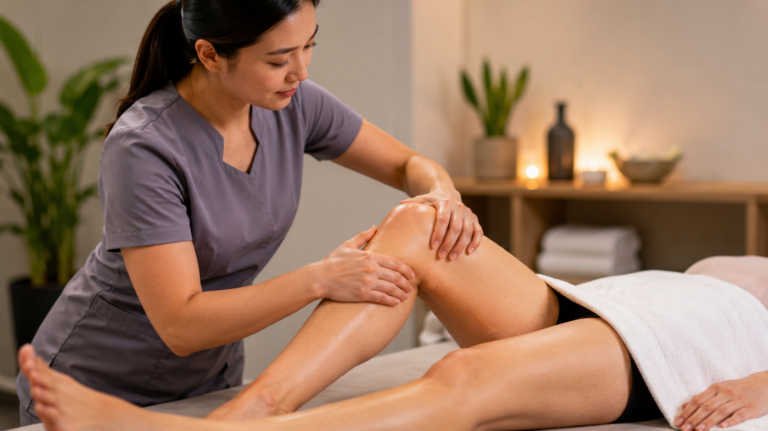



If you spend most of your day at a desk, the best massage for office workers is deep tissue massage, usually paired with stretch work to release tight hips and shoulders. Desk jobs create a very predictable pattern of tension: a stiff neck, knotted upper back, locked hip flexors, and a lower back that starts aching by mid afternoon. That pattern doesn’t come from one bad day at the computer. It builds slowly, over thousands of hours spent in the same seated position with your head slightly forward and your arms reaching toward a keyboard.
The good news is that the same predictability that causes the problem also makes it easy to treat. Once you know which massage type targets which symptom, you can stop guessing and start booking sessions that actually change how you feel at 4 p.m.
Why Desk Work Creates So Much Tension
Sitting isn’t inherently harmful. Sitting in one position for hours, with almost no variation, is where the trouble starts. Your muscles are built to contract and lengthen throughout the day. When they hold a single static position instead, some shorten and stiffen while others get stretched out and weak.
UCLA Health notes that prolonged sitting places significant pressure on the back muscles and spinal discs, especially when you slouch. Over months and years, that pressure shows up as recurring neck and back pain rather than a single injury you can point to.
Forward Head Posture and Neck Strain
Your head weighs roughly 10 to 12 pounds. Every inch it drifts forward toward your monitor effectively multiplies the load your neck muscles have to carry. By the end of the workday, the muscles running from the base of your skull to your shoulder blades are fatigued from doing a job they were never meant to do all day.
That’s why so many office workers describe the same thing: a dull ache at the base of the skull, tightness across the tops of the shoulders, and headaches that show up after long screen sessions.
Rounded Shoulders and Upper Back Knots
Typing keeps your arms in front of your body, which shortens the chest muscles and overstretches the muscles between your shoulder blades. The result is a rounded posture and a cluster of stubborn knots in the upper back that foam rolling never quite reaches.
Read more: Deep tissue massage for desk workers and how it helps pain and posture
Tight Hips and Lower Back Pressure
Sitting keeps your hip flexors in a shortened position for hours at a time. When those muscles tighten, they tug on the pelvis and change the angle of your lower spine. Your lower back ends up absorbing strain that your hips and glutes should be sharing. Plenty of people chase lower back pain for years without realizing the actual source is above the knee and in front of the hip.

Matching the Best Massage for Office Workers to Your Symptoms
There isn’t one universal answer for every desk job. A software engineer with wrist and forearm tightness needs something different from a sales manager carrying stress in their jaw and shoulders. Here’s how the main options break down.
Deep Tissue Massage for Chronic Tightness
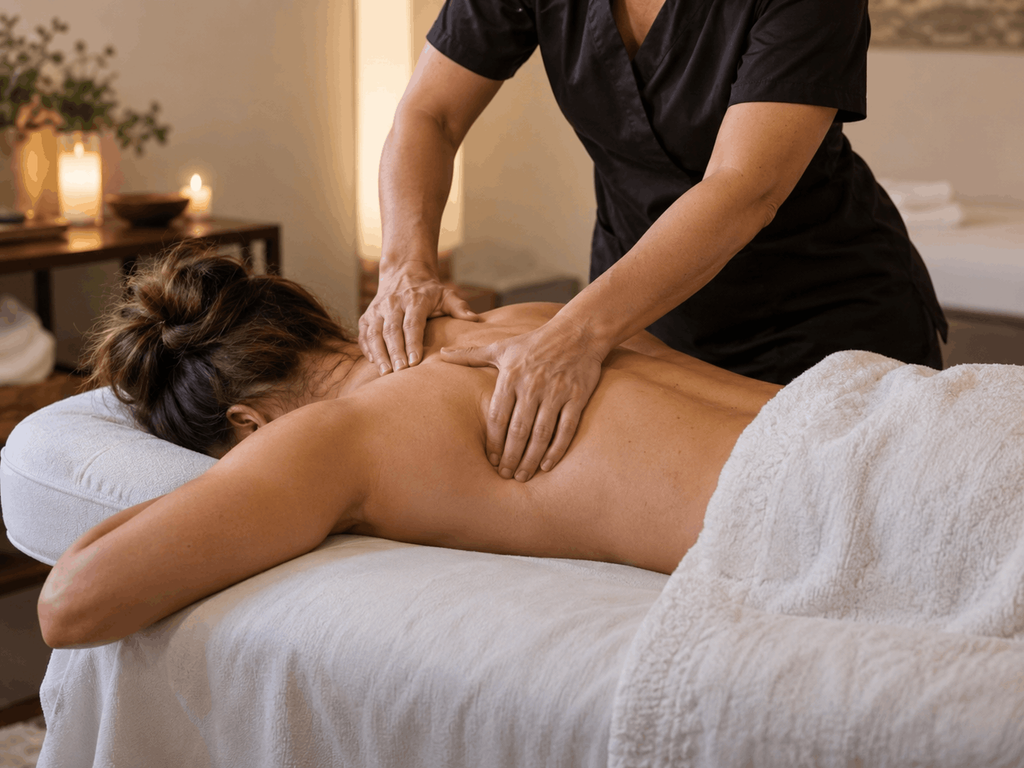
Deep tissue work uses slower strokes and sustained pressure to reach the muscle layers underneath the surface. For office workers, this is the workhorse. It addresses the tension that has been building for months in the upper traps, rhomboids, and lower back.
A good therapist won’t just press harder. They’ll work along the direction of the muscle fibers, hold at points of restriction, and give the tissue time to release. Expect some tenderness the next day, similar to how you feel after a solid workout.
Book a deep tissue massage in Pearland at Elite Massage Therapy if your tension has been building for months rather than days.
Trigger Point Massage for Knots and Referred Pain
Trigger points are hyperirritable spots in a tight band of muscle that refer pain somewhere else. A knot in your upper trap can send pain up into your temple. A trigger point in the shoulder blade can create a burning sensation down the arm that feels like a nerve problem.
If your pain moves or shows up in a spot that seems unrelated to where you feel tight, trigger point massage is often the faster fix. Sessions are more targeted and involve sustained pressure on specific points rather than full body coverage.
Read more: How trigger point massage relieves neck pain
Stretch Massage for Stiffness and Limited Range
If your complaint is less about pain and more about feeling stuck, assisted stretching is the better call. The therapist moves your joints through their range while lengthening the surrounding muscles, which is especially useful for the hip flexors, hamstrings, and chest that desk work keeps short.
Many office workers get the best results by combining approaches: deep tissue for the upper back, stretch massage for the hips and shoulders.
Swedish Massage for Stress-Driven Tension
Not all desk tension is mechanical. High-pressure jobs keep your nervous system in a low-grade stress state, and tense muscles are part of that response. Swedish massage uses lighter, flowing pressure to calm the nervous system, improve circulation, and reduce that constant bracing. If deep pressure makes you tense up rather than relax, start here.
| Your Main Symptom | Best Massage Type | Why It Works |
| Stiff, achy neck and upper traps | Deep tissue | Reaches the deeper muscle layers holding chronic tension |
| Knots that refer pain elsewhere | Trigger point | Targets the specific point creating the referred pain |
| Tight hips and lower back pressure | Stretch massage | Lengthens hip flexors so the lower back stops compensating |
| Rounded shoulders and poor posture | Deep tissue plus stretch | Releases the chest, then rebuilds range across the upper back |
| Tension headaches after screen time | Trigger point | Addresses the neck and shoulder points that refer into the head |
| Stress-related bracing and poor sleep | Swedish | Calms the nervous system and reduces overall muscle guarding |
How Often Should Office Workers Book a Massage
The honest answer depends on how many hours you sit and how long the problem has been building. One session feels great, but it won’t undo three years of desk posture. Consistency matters more than intensity.
Most desk workers do well with a session every two to four weeks during maintenance, and weekly or biweekly during an active flare-up. If you’re dealing with pain that limits your work, a tighter schedule up front makes a real difference, then you can space sessions out once symptoms settle.
| Your Situation | Suggested Frequency | Session Length |
| Active pain limiting your workday | Weekly for 3 to 4 weeks | 60 to 90 minutes |
| Recurring stiffness, no sharp pain | Every 2 weeks | 60 minutes |
| General maintenance and prevention | Every 3 to 4 weeks | 60 minutes |
| High-stress period or deadline season | Every 2 weeks | 60 to 90 minutes |
| Long-standing posture issues | Weekly for a month, then biweekly | 90 minutes |
Ninety-minute sessions are worth considering if you have more than one problem area. A 60-minute session split between neck, shoulders, hips, and lower back gets spread thin.
What to Do Between Sessions
Massage resets the tissue. What you do the other 29 days determines whether the tension comes back at the same intensity. A few habits make a noticeable difference:
- Stand and move for two minutes every 45 to 60 minutes, even if it’s just a walk to refill your water
- Raise your monitor so the top of the screen sits at eye level, which stops your head from drifting forward
- Open your hip flexors with a kneeling stretch twice a day, holding 30 seconds per side
- Pull your shoulder blades back and down a few times an hour to counteract typing posture
- Drink water consistently, since dehydrated muscle tissue is stiffer and more prone to knotting
- Strengthen your upper back, because stretching alone won’t hold posture in place without the muscle to support it
Read more: how deep tissue massage improves posture over time
Why Choose Elite Massage Therapy in Pearland
At Elite Massage Therapy in Pearland, TX, sessions start with an actual conversation about your work setup, your hours, and where you feel it most. That matters, because two office workers with the same job title often need completely different treatment plans.
Our licensed therapists build personalized sessions rather than running the same routine on everyone. If your hips are the real driver of your back pain, that’s where the work goes. If your neck is compensating for a monitor set too low, you’ll hear about it, along with what to change. We also offer packages for clients who want to stay ahead of tension instead of reacting to it after a flare-up.
Ready to fix desk pain at the source? Book your session at Elite Massage Therapy or call (346) 907-5104.
Bottom Line: The Best Massage for Office Workers
Desk tension is predictable, which means it responds well to the right approach. For most people, that means deep tissue work targeting the neck, shoulders, and lower back, supported by assisted stretching for the hips and chest. Add a consistent schedule and a few small changes to your workstation, and you’ll notice the difference in how you feel by the end of a long workday.
You can explore all available options on our massage services page and pick the session that fits your symptoms.
Frequently Asked Questions: Best Massage for Office Workers
Is deep tissue or Swedish massage better for desk workers?
Deep tissue is better for chronic tightness and knots, while Swedish is better for stress-driven tension and general relaxation. Most office workers with real pain benefit more from deep tissue. If you’re mainly wound up from a high-pressure job and deep pressure makes you tense, Swedish is the smarter starting point. Many clients alternate between the two.
How long does massage relief last for office workers?
Relief typically lasts one to three weeks, depending on how many hours you sit and whether you move during the day. The more static your workday, the faster tension returns. Adding movement breaks and simple stretches between sessions can stretch that relief considerably.
Can massage fix bad posture from sitting all day?
Massage releases the tight muscles pulling you out of alignment, but holding better posture also requires strengthening the muscles that support it. Think of massage as removing the restriction and strength work as maintaining the change. Together they produce lasting results, which is why our therapists often send clients home with specific movement suggestions.
Should I get a massage before or after work?
After work is generally better, since your muscles have already accumulated the day’s tension and you can relax fully afterward. Morning sessions still help, but you’ll walk straight back into the posture that caused the problem. If you can only book in the morning, plan on extra movement breaks that day.
Where can office workers get a good massage in Pearland?
Elite Massage Therapy in Pearland, TX offers deep tissue, trigger point, stretch, and Swedish massage with licensed therapists who tailor each session to your work habits. Sessions are built around your specific pain points rather than a fixed routine. Book online or call (346) 907-5104 to get started.